vitababy
As babies grow and begin exploring new foods and drinks, many parents wonder when it is okay to introduce juice. While fruit juice may seem like a healthy option, pediatric experts recommend waiting before offering it regularly to babies and toddlers.
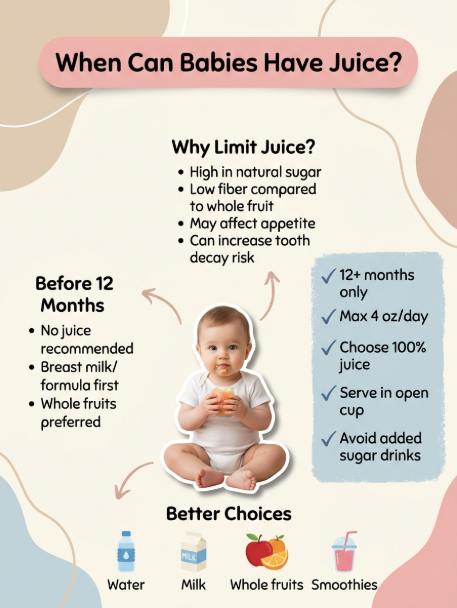
According to current pediatric guidelines, fruit juice should not be given to infants under 12 months old because it offers no nutritional benefit during the first year of life.
Can Babies Drink Juice?
For babies younger than 12 months, juice is not recommended. During infancy, breast milk or formula should remain the primary source of nutrition, alongside age-appropriate solid foods introduced around 6 months.
Additional feeding recommendations also advise against giving juice before age 1.
Even 100% fruit juice contains concentrated natural sugars and lacks the fiber found in whole fruit. Without fiber, juice is easier to overconsume and may not keep babies full for long.
Why Experts Recommend Waiting
Whole fruits provide:
- Fiber for healthy digestion
- Vitamins and minerals
- More balanced nutrition
- Natural texture exposure for oral development
Research suggests that too much juice may:
- Increase the risk of tooth decay
- Cause diarrhea or stomach discomfort
- Reduce appetite for nutrient-rich foods
- Encourage a preference for sweet drinks early in life
Frequent juice consumption, especially from bottles or sippy cups throughout the day, can also expose teeth to sugar for long periods.
When Can Babies Have Juice?
After 12 months of age, small amounts of juice can occasionally be offered.
Current juice intake recommendations suggest:
- No juice before 12 months
- No more than 4 ounces (120 mL) per day for children ages 1–3 years
Juice should not replace water, milk, or whole fruits in a toddler’s diet.
Best Practices for Offering Juice
If parents choose to serve juice, experts recommend:
- Choosing 100% fruit juice only
- Avoiding juice drinks or fruit cocktails with added sugar
- Serving juice in an open cup instead of a bottle
- Offering juice with meals rather than throughout the day
- Limiting portion sizes
- Diluting juice with water if desired
Parents should also avoid unpasteurized juice because it may contain harmful bacteria that can make young children sick.
Can Juice Help With Constipation?
In some cases, pediatricians may suggest small amounts of prune, pear, or apple juice for occasional constipation in older infants and toddlers.
However, juice should not become a regular treatment without medical guidance. Parents should consult their pediatrician if constipation is frequent or persistent.
Better Alternatives to Juice
Instead of juice, parents can offer:
- Fresh fruit slices
- Mashed berries
- Watermelon
- Soft ripe pears
- Smoothies made with whole fruit
- Water and milk after 12 months
Early healthy eating habits can help shape long-term food preferences and support healthy growth and development.
What Parents Should Remember
Juice is unnecessary for babies under 1 year old, and even after infancy, it is best offered in small amounts and occasionally. Whole fruits remain the healthier choice because they provide fiber, nutrients, and a more balanced eating experience.
By focusing on water, milk, and whole fruits early on, parents can help children build healthy drinking and eating habits that support growth and development.
Originally published on Medium.