vitababy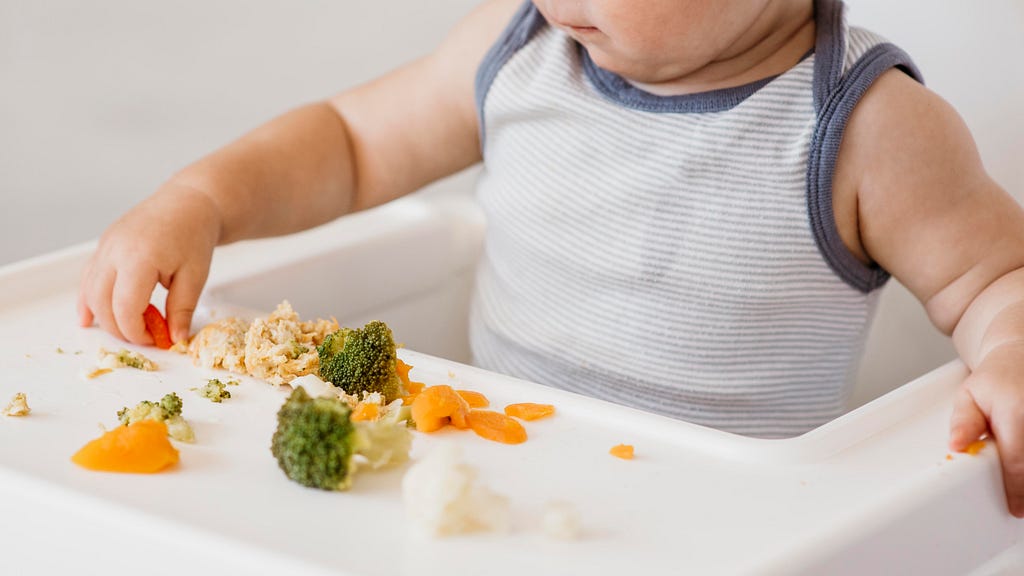
Learn how to safely introduce solid foods to a baby with diagnosed food allergies. Discover evidence-based tips on nutrition, monitoring symptoms, and safe feeding.
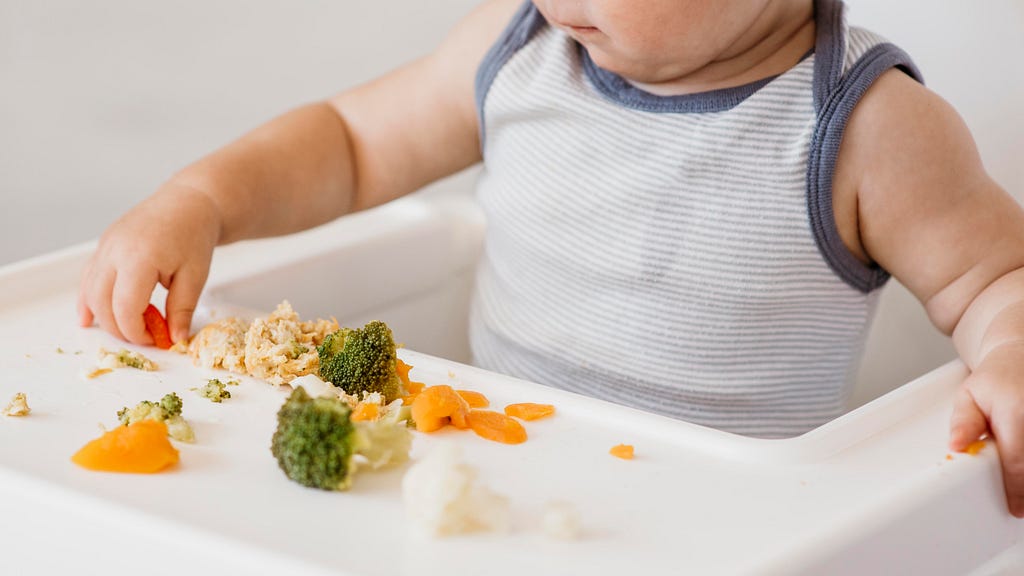
It is completely normal to feel hesitant about starting solid foods if your baby already has a diagnosed food allergy. When a child has previously reacted to a specific food, parents naturally worry about triggering another allergic response.
However, introducing a variety of foods remains a vital part of your baby’s growth and development. According to the American Academy of Pediatrics (AAP), most babies are ready to begin complementary foods around 6 months of age. Having a food allergy does not mean your baby should avoid all new foods. It simply requires a structured, observable approach to feeding.
Understanding Food Introduction Guidelines
When a baby has a known food allergy, pediatricians and allergists generally recommend continuing to introduce new foods rather than delaying them. Delaying the introduction of other highly allergenic foods does not prevent further allergies and may actually limit the child’s nutritional intake.
The goal is to build a diverse diet safely. To do this, medical professionals recommend a specific pacing strategy.
The Single-Ingredient Rule
When offering a new food, always present it as a single ingredient. For example, give your baby plain mashed sweet potato rather than a blend of sweet potato and apples.
If you offer a blend of multiple new foods and your baby has an allergic reaction, it will be very difficult to determine which ingredient caused the issue.
The Waiting Period
After introducing a new food, wait 3 to 5 days before introducing another new item. During this window, you can continue to feed the baby the new food along with any other foods they have already safely consumed. This waiting period gives you time to observe any delayed allergic reactions, which can sometimes take hours or days to appear in the form of digestive issues or skin rashes.
Time of Day Matters
Introduce new foods in the morning or early afternoon. Feeding a new food early in the day gives you several hours to monitor your baby for any adverse reactions while they are awake. If a reaction occurs, it is much easier to contact your pediatrician or seek medical care during regular daytime hours.
Can Breastfeeding Prevent Food Allergies? What Parents Need to Know | VitaBaby Blog
Monitoring for Allergic Reactions
Knowing what to look for can help reduce anxiety during mealtime. Symptoms of a food allergy can range from mild to severe.
Mild to Moderate Symptoms
If you notice any of these signs, stop feeding the food and contact your pediatrician:
- New hives or welts on the skin
- Redness or a rash around the mouth
- Vomiting (more than typical infant spit-up)
- Diarrhea or mucus in the stool
Severe Symptoms
Severe allergic reactions require immediate emergency medical care. Watch for these critical signs:
- Swelling of the lips, tongue, or face
- Wheezing, coughing, or difficulty breathing
- Changes in skin color (pale or bluish)
- Sudden lethargy or unresponsiveness
Ensuring Nutritional Needs Are Met
When a baby is diagnosed with an allergy to a major food group, such as dairy or eggs, parents must find alternative ways to provide the missing nutrients.
Infants require significant amounts of healthy fats, iron, and calcium to support rapid brain and physical development. If your baby’s allergy restricts a common source of these nutrients, you can substitute them with other whole foods.
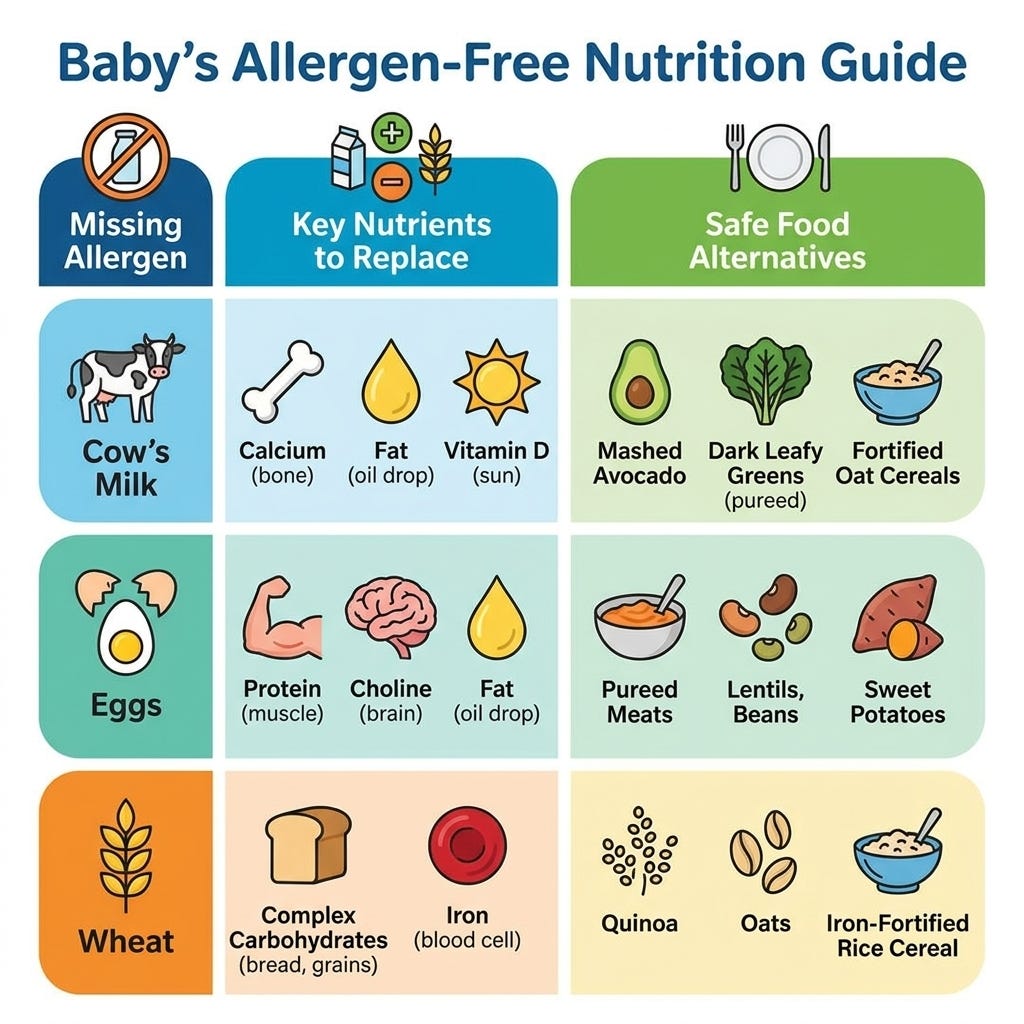
Working with a pediatric dietitian is a highly effective way to ensure your baby’s diet remains balanced. Some parents may also explore nutrition support products such as those at Vitababy as part of a broader approach to meeting their child’s nutritional needs under the guidance of a healthcare professional.
Practical Tips for Stress-Free Feeding
Managing food allergies can be stressful, but mealtime should still be a positive experience for your baby.
- Keep a Food Log: Write down what your baby eats each day and note the time. If a reaction occurs, this log will be highly valuable for your pediatrician.
- Prevent Cross-Contamination: If the allergen is still present in your home for other family members, ensure you use separate cutting boards, utensils, and sponges when preparing your baby’s food.
- Have an Action Plan: If your baby’s doctor has prescribed an epinephrine auto-injector, always keep it nearby during meals. Knowing you are prepared for an emergency can significantly reduce your anxiety.
- Start Small: A baby’s first meals are about practice, not volume. Offering just half a teaspoon of a new food is enough to gauge their tolerance and practice swallowing.
Originally published on Medium.