vitababy

The first two years of a child’s life involve a period of rapid physical and cognitive growth. During this specific window of time, daily nutrition provides the physical building blocks required to shape long term health outcomes. One specific nutrient that healthcare professionals and researchers consistently emphasize is Docosahexaenoic acid, which is commonly known as DHA.
DHA is a long chain omega 3 polyunsaturated fatty acid. While the human body can produce a very small amount of DHA from other dietary fats, the vast majority must come directly from food sources. Public health research shows that acquiring enough omega 3 fatty acids is a fundamental requirement for the normal development of the central nervous system and the visual system in infants. Understanding how this nutrient functions and how to incorporate it into a baby’s daily routine can help parents make informed feeding decisions.
The Role of Nutrition in Early Development
Nutrition does more than just provide calories for energy. The specific fats, proteins, and vitamins a baby consumes dictate how their organs develop and mature. The brain is uniquely dependent on dietary fats. In fact, nearly sixty percent of the human brain is composed of fat. Without the right types of fat in the diet, the brain cannot form the complex cellular structures needed for communication and processing.
Understanding Omega 3 Fatty Acids
Omega 3 fatty acids are a family of polyunsaturated fats. There are three main types. Alpha-linolenic acid (ALA) is found in plant sources like flaxseeds and walnuts. Eicosapentaenoic acid (EPA) and Docosahexaenoic acid (DHA) are found in marine sources like fish and algae. While all three are necessary for human health, DHA is the specific omega 3 that acts as a structural component for brain and eye tissue.
Why DHA is Essential for Infant Brain and Eye Development
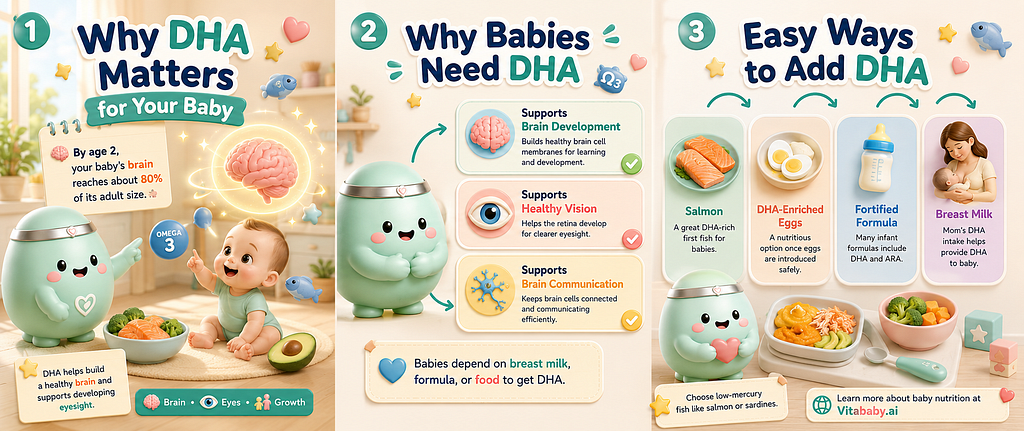
A baby’s brain undergoes massive structural changes early in life. By the time a child reaches age two, their brain is approximately eighty percent of its adult size. The nutrition provided during these first two years literally builds the physical architecture of the brain. DHA is not just a source of energy for this growth. It is a primary physical building block of the organ itself.
How DHA Supports Brain Structure and Cognitive Function
DHA is the most abundant omega 3 fatty acid found in the human brain. It is heavily concentrated in the gray matter and the frontal lobes. These specific areas of the brain are responsible for complex tasks and executive functions such as reasoning, strategic planning, and problem solving.
At a cellular level, DHA is incorporated directly into neuronal cell membranes. The presence of this specific fat keeps the cell membranes fluid and flexible. This fluidity is necessary because it allows brain cells to communicate efficiently with one another. When neurons can transmit electrical signals smoothly across synapses, it supports early cognitive processes like memory retention, sustained attention, and basic learning.
Peer reviewed medical data indicates that adequate long chain polyunsaturated fatty acid intake during infancy is closely associated with normal neurodevelopmental outcomes as children reach school age. Furthermore, DHA is involved in the formation of myelin. Myelin is a protective sheath that wraps around nerve fibers, allowing electrical impulses to travel quickly and efficiently throughout the nervous system.
DHA and Visual Acuity: Protecting Retinal Health
The developmental necessity of DHA extends directly to a baby’s eyes. The retina is the light sensitive layer of tissue located at the back of the eye, and it contains the highest concentration of DHA in the entire human body.
DHA supports the physical structure and function of photoreceptors, which are the specialized cells that process light and send visual signals back to the brain. When infants maintain optimal levels of DHA, they tend to show improved visual acuity. This means their ability to distinguish fine details, recognize faces, process spatial information, and develop strong hand eye coordination is supported by the physical health of their retinal cells.
Addressing the Specific Needs of Premature Babies
The biological transfer of DHA from a mother to her baby happens most rapidly during the third trimester of pregnancy. This is the period when a fetus accumulates the large stores of fat needed to support rapid brain growth immediately after birth.
Because premature infants are born before this third trimester transfer is complete, they frequently begin life with lower baseline levels of DHA. Pediatricians and neonatologists closely monitor the nutritional intake of premature babies to ensure they receive adequate omega 3 fatty acids.
In a hospital setting, this is often achieved through specialized fortified premature formulas or the addition of human milk fortifiers to maternal breast milk. This nutritional intervention helps to close the developmental gap and supports normal neurological maturation in infants who were born early. Parents of premature infants will typically work closely with a pediatric dietitian after discharge to ensure ongoing nutritional goals are met.
How Babies Get DHA: Nutrition and Feeding Considerations
Because infants cannot synthesize enough DHA on their own, they rely entirely on external dietary sources. The way a baby receives this essential fatty acid changes as they grow from a newborn into a toddler eating regular family meals.
Providing DHA Through Breastmilk and Maternal Diet
For exclusively breastfed babies, breastmilk is the sole source of DHA. However, the exact amount of DHA present in breastmilk is directly tied to the mother’s personal diet. If a nursing mother consumes adequate amounts of omega 3 rich foods, her milk will provide enough DHA for her baby.
Global health recommendations suggest that pregnant and nursing women aim for a dietary intake of 200 to 300 milligrams of DHA per day to support infant development. Mothers can achieve this by consuming low mercury fatty fish or by taking a high quality daily supplement. Breastfeeding mothers who follow vegetarian or vegan diets should consider speaking with their healthcare provider about marine algae supplements to ensure their breastmilk contains sufficient DHA.
Ensuring Adequate Intake Through Infant Formula
For babies who are formula fed, manufacturers add DHA to the powder to mimic the nutritional profile of human milk. Federal regulations oversee the safety, nutritional adequacy, and exact composition of these infant formulas to ensure they support normal infant growth.
When selecting a product, parents can check the ingredient label to ensure it contains DHA as well as Arachidonic Acid (ARA). ARA is another important long chain fatty acid that naturally occurs in breastmilk. DHA and ARA work together to support cellular growth, immune function, and brain development.
Introducing Direct Dietary Sources with Solid Foods
Around six months of age, babies begin the transition to solid foods. As breastmilk or formula intake eventually decreases over the next year, parents must actively introduce direct dietary sources of DHA into the child’s daily meals.
Fatty fish is the most potent natural dietary source. Pediatric guidelines recommend safe, low mercury options for babies and toddlers. These include salmon, sardines, herring, and light canned tuna. Parents can flake thoroughly cooked salmon into small, manageable pieces to serve as finger food or blend it thoroughly into a vegetable puree for younger babies.
Navigating Plant Based Diets for Infants
For families following a vegetarian or vegan diet, acquiring direct DHA can be more challenging. Plant based sources like flaxseeds, chia seeds, and walnuts contain a different type of omega 3 called Alpha-linolenic acid (ALA).
The human body must convert ALA into DHA before it can be used by the brain and eyes. Because this conversion process is highly inefficient in infants, relying solely on nuts and seeds may not provide optimal DHA levels. Parents relying on plant based diets may need to look for foods explicitly fortified with algae based DHA, or discuss a direct DHA supplement with their pediatrician to ensure adequate intake.
Parents looking for comprehensive information on structuring a nutrient dense diet for their baby might explore resources like Vitababy to learn more about targeted nutritional support for infant development. Always consult your pediatrician or a pediatric registered dietitian before adding any new dietary supplements to a child’s routine.
Practical Feeding Tips for Parents
Managing a baby’s daily nutrition can feel complicated, but establishing a few straightforward habits can help ensure they receive adequate omega 3 fatty acids.
- Focus on maternal diet first: If you are currently breastfeeding, prioritize eating two servings of low mercury fatty fish per week. If you do not eat fish due to dietary preferences or allergies, speak to your healthcare provider about taking a high quality DHA supplement derived from fish oil or marine algae. This ensures your breastmilk contains the nutrients your baby needs.
- Check the formula label: If you use infant formula, verify the ingredients. Most modern formulas clearly advertise the inclusion of DHA and ARA on the front of the packaging. Ensure you are mixing the formula exactly according to the manufacturer’s directions so your baby receives the correct concentration of nutrients in every bottle.
- Introduce seafood early: Once your pediatrician clears your baby to begin solid foods, you can introduce mashed or pureed low mercury fish just as you would introduce traditional first foods like vegetables or fruits. Early introduction can help babies accept the distinct taste and texture of seafood, making it easier to serve them fish as they grow into picky toddlers.
- Read food labels carefully: When buying eggs, milk, or yogurt for an older baby or toddler, look for products that are explicitly fortified with omega 3s. Many egg brands now feed their hens a diet rich in flaxseed or algae to boost the DHA content of the eggs, which provides an easy way to add this nutrient to a child’s breakfast.
- Keep feeding expectations realistic: Building a balanced diet takes time and patience. If your baby rejects a serving of salmon, wait a few days and try offering it again. You can also try mixing a small amount of fish into a familiar favorite food like mashed sweet potato or avocado to help mask the stronger flavor.
Originally published on Medium.