vitababy

Starting solid foods marks a major milestone in your infant’s development. As you transition your baby toward family meals, you may wonder which everyday kitchen ingredients are appropriate to include. Butter is a staple in many home-cooked dishes, but knowing whether it is safe, beneficial, or necessary for your baby requires a closer look at early childhood nutritional recommendations.
Understanding when to offer butter, how to select the right variety, and how it fits into a balanced weaning diet can help you make confident choices for your child.
When Can Babies Have Butter?
Infants rely exclusively on breast milk or infant formula for their complete nutrition during the first 6 months of life. Health experts recommend introducing solid foods at around six months of age, when an infant shows key signs of physical readiness, such as sitting with minimal support, holding their head steady, and bringing food to their mouth.
Once your baby begins complementary foods, small amounts of butter can be incorporated into their meals. Dairy products made from pasteurized milk can be offered from six months onward as part of a varied diet.
The Nutritional Role of Dietary Fats for Babies
Fat plays a fundamental role in infant growth. Unlike adults, who often monitor saturated fat intake, rapidly growing babies need energy-dense foods to fuel their rapid physical and brain development.
- Concentrated Energy: Fats provide a dense source of calories. During the initial months of complementary feeding, a baby’s stomach capacity is small, so adding small quantities of fat helps ensure they receive sufficient energy.
- Nutrient Absorption: Fat-soluble vitamins, including vitamins A, D, E, and K, require dietary fat for proper absorption. Cooking or mashing vegetables with a light coat of fat helps the body utilize these nutrients.
- Brain and Nervous System Support: Dietary fats support the structural development of the brain and nervous tissue during early childhood.
While butter supplies energy and aids nutrient absorption, it should complement a diet built primarily around nutrient-dense whole foods such as vegetables, fruits, iron-rich meats, fish, eggs, and legumes.
Choosing the Right Butter for Your Baby
When selecting butter for home-prepared baby food, the specific type matters.
1. Always Choose Unsalted Butter
Infants under 12 months have immature kidneys that cannot efficiently process high levels of sodium. Standard salted butter contains added salt, which can quickly add up in a baby’s daily diet. Always opt for unsalted butter when preparing meals for your infant, and avoid adding extra table salt or salty seasonings to their portions.
2. Verify Pasteurized Dairy
Ensure any butter or dairy product offered to your child is produced from pasteurized milk. Unpasteurized dairy foods carry a risk of harmful bacteria such as Listeria, which can cause severe illness in young children.
3. Butter vs. Margarine and Spreads
Pure unsalted butter or plant-based cooking oils (such as olive oil) are preferred over ultra-processed spreads or margarines containing hydrogenated fats and extra additives.
Practical Ways to Serve Butter
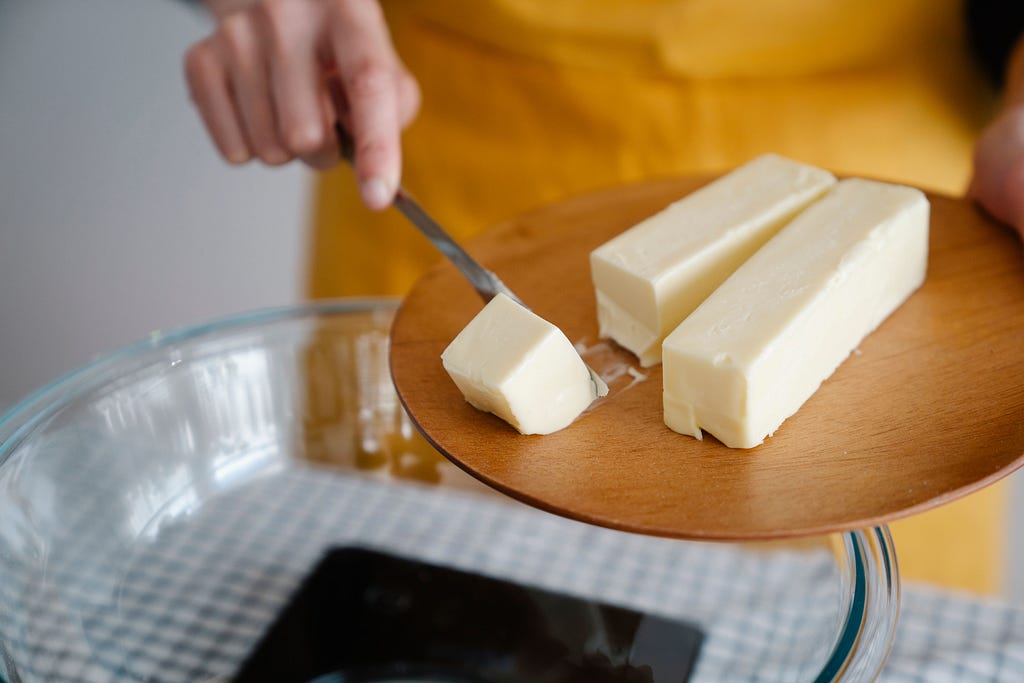
Butter should be used as an ingredient or flavor booster rather than a standalone food. Adding a fraction of a teaspoon to homemade purees or finger foods is a straightforward way to increase energy density, particularly for children who require extra calorie intake during growth phases.
Here are safe and practical ways to include butter in your baby’s meal routine:
- Mashed Vegetables: Stir a tiny knob (around 1/2 teaspoon) of unsalted butter into warm, cooked root vegetables like sweet potatoes, carrots, or butternut squash.
- Family Grains: Blend a small amount of unsalted butter into warm porridge, oats, or soft-cooked rice.
- Finger Foods: Spread a very thin layer of unsalted butter across strips of soft whole-grain toast or finger-friendly vegetable slices.
If you are exploring diverse nutrition supports or exploring dietary routines during weaning, comprehensive resources like Vitababy offer clear context on early childhood development and infant nutrition.
Dairy Allergies and Sensitivities
Because butter is derived from cow’s milk, it contains milk proteins (such as whey and casein) and trace amounts of lactose. Cow’s milk protein is one of the most common early childhood food allergens.
When introducing butter or any dairy product for the first time:
- Serve Separately: Offer butter alongside foods your baby has already safely eaten without reaction. Do not introduce multiple new potential allergens on the same day.
- Start Small: Begin with a tiny portion to observe how your baby responds.
- Monitor for Reactions: Keep an eye out for signs of a allergic response, such as hives, skin rash, swelling of the lips or face, vomiting, or breathing changes. Contact a healthcare provider immediately if you suspect an allergic reaction.
Children diagnosed with a confirmed cow’s milk protein allergy (CMPA) should avoid butter entirely unless advised otherwise by a pediatric dietitian or allergist.
Originally published on Medium.