vitababy
Baby Nutrition & Digestive Health
Simple meal ideas, food lists, and practical feeding tips for babies who need a temporary lactose-free diet
Lactose intolerance in babies is often temporary and can occur after a stomach infection or digestive illness. During recovery, a lactose-free diet may help reduce symptoms such as diarrhea, bloating, gas, and tummy discomfort. Understanding which foods are suitable and how to maintain balanced nutrition can make mealtimes easier for both babies and caregivers.
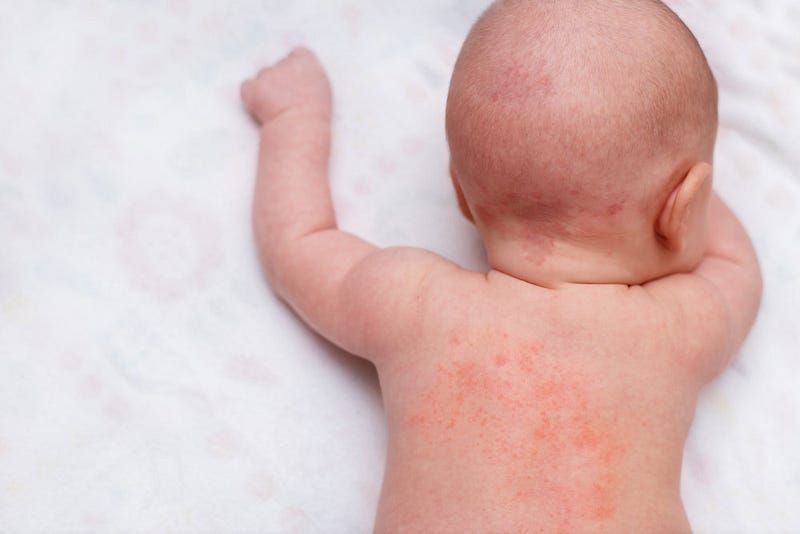
Cow’s milk protein allergy affects an estimated 2% to 5% of infants during the first months of life, whereas primary lactose intolerance is uncommon before two to three years of age. Because the symptoms can overlap, it is important to distinguish between these two conditions.
This guide explains the basics of a lactose-free diet for babies, including foods to choose, foods to avoid, sample meal plans, and important nutrients to monitor during the lactose-free period. Based on guidance from the Black Country 0–18 NHS service, it also highlights practical ways to support healthy growth while the digestive system heals.
What Is a Lactose-Free Diet?
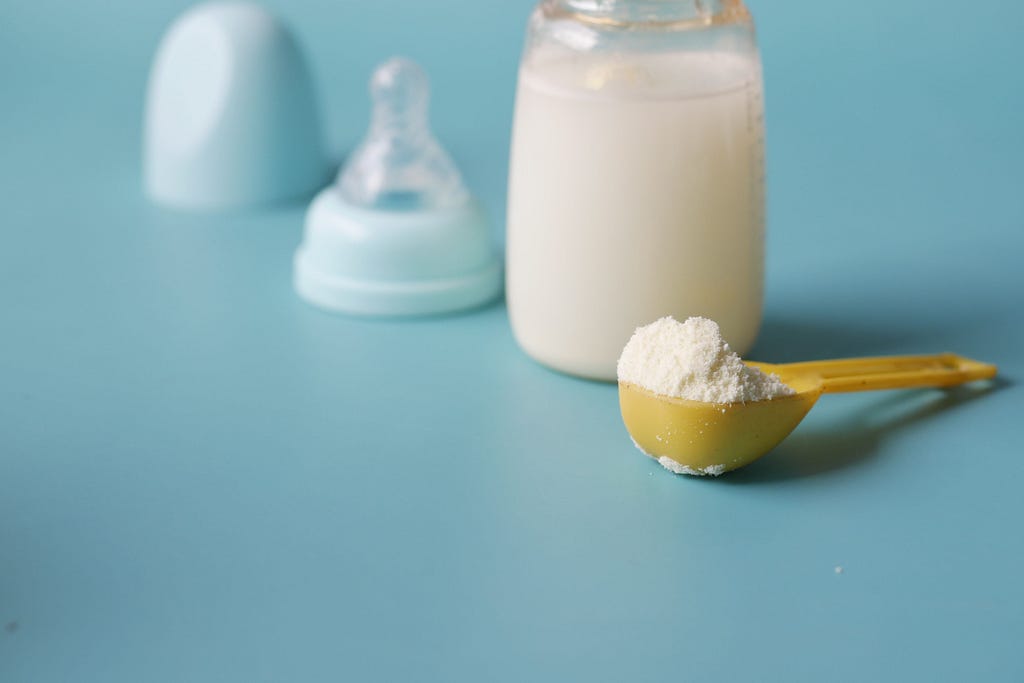
A lactose-free diet reduces or removes foods containing lactose. This helps give the digestive system time to recover and can ease symptoms associated with lactose intolerance.
For babies under one year of age, breast milk or a suitable lactose-free infant formula should remain the main source of nutrition. Solid foods should complement milk feeds rather than replace them.
Good to Know: Lactose Intolerance Is Rare in Young Babies
True lactose intolerance is uncommon in infants. According to the AAP, primary lactose intolerance rarely appears before 2–3 years of age. When younger babies show similar symptoms, other causes such as temporary digestive issues or cow’s milk protein allergy may be considered.
Many nutritious foods are naturally lactose-free and can be included in a baby’s diet.
Some matured hard cheeses, such as Cheddar and Edam, contain very little lactose and may be tolerated by some children. Always follow advice from a healthcare professional when introducing these foods.
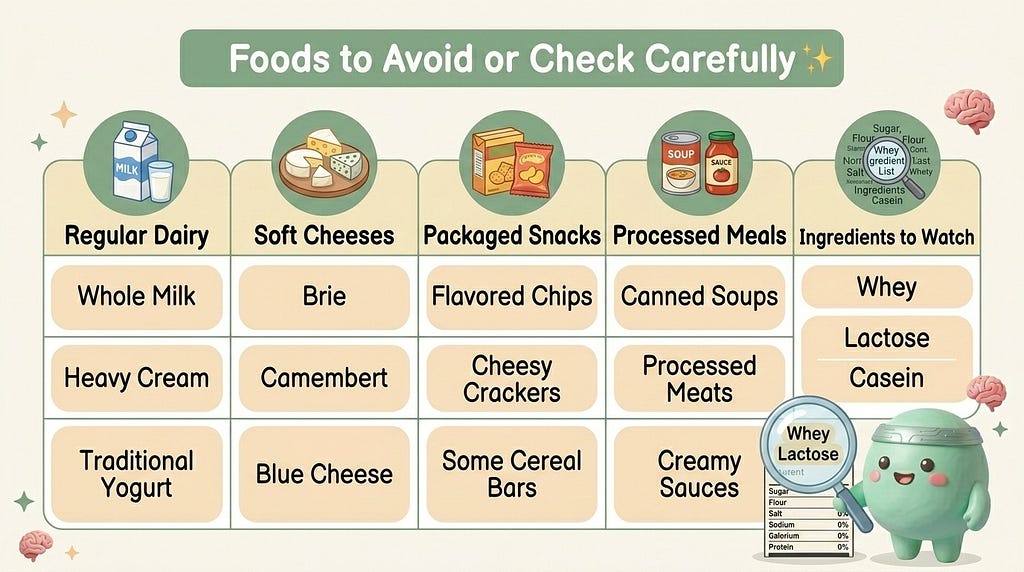
Many packaged foods contain hidden dairy ingredients, so reading labels is important.
Sample 3-Day Lactose-Free Meal Plan (6+ Months)
The following meal ideas show how naturally lactose-free foods can be combined to create balanced meals for babies aged six months and older.
Day 1
Start the day with oat porridge made using lactose-free formula and mashed banana. For lunch, offer mashed sweet potato with shredded chicken. Banana slices or puree make a simple snack. At dinner, serve rice with carrot and lentil puree.
Day 2
Breakfast can include oatmeal with mashed avocado. For lunch, try a potato and fish mash. Pear puree works well as a light snack. In the evening, offer quinoa with pumpkin puree and egg yolk.
Day 3
Serve rice cereal prepared with lactose-free formula for breakfast. Lunch can be soft pasta with tomato sauce and minced turkey. Mango puree makes a naturally sweet snack. For dinner, offer soft-cooked vegetables with tofu.
Continue offering breast milk or lactose-free infant formula alongside solid foods, as milk remains an important source of nutrition during the first year.
Simple Lactose-Free Recipe Ideas
Creamy Banana Oats
Cook oats until soft and allow them to cool slightly. Stir in prepared lactose-free formula and mix with mashed banana before serving.
Sweet Potato and Chicken Mash
Steam sweet potato until tender. Blend or mash with cooked chicken and a small amount of lactose-free formula to create a smooth texture.
Pumpkin and Lentil Puree
Cook pumpkin and red lentils until soft. Blend until smooth and adjust the consistency with water if needed.
Supporting Calcium and Vitamin D Intake
When dairy foods are reduced, it is important to ensure babies continue receiving adequate calcium and vitamin D.
Good sources of calcium include:
- Lactose-free infant formula
- Calcium-fortified foods
- Tofu made with calcium
- Certain green vegetables
Vitamin D supplementation may also be recommended depending on a baby’s age and feeding pattern. Parents should follow local healthcare guidance regarding vitamin D supplements.
Can Lactose Be Reintroduced?
In many cases, lactose intolerance in babies is temporary. Once symptoms have improved and the digestive system has recovered, lactose-containing foods can often be reintroduced gradually.
A healthcare professional may recommend starting with small amounts of dairy and monitoring for any return of symptoms.
When to Seek Medical Advice
Speak with a healthcare professional if a baby experiences:
- Persistent diarrhea
- Poor weight gain
- Signs of dehydration
- Blood in stools
- Ongoing digestive symptoms despite following a lactose-free diet
These symptoms may indicate another condition, including a cow’s milk protein allergy, which requires different management.
A lactose-free diet does not need to be restrictive. Many fruits, vegetables, grains, and protein-rich foods are naturally lactose-free and can provide the nutrients babies need during recovery.
With careful food choices and continued use of breast milk or lactose-free infant formula, babies can maintain healthy growth while their digestive system heals. In many cases, lactose-containing foods can later be reintroduced as tolerance improves.
Originally published on Medium.