

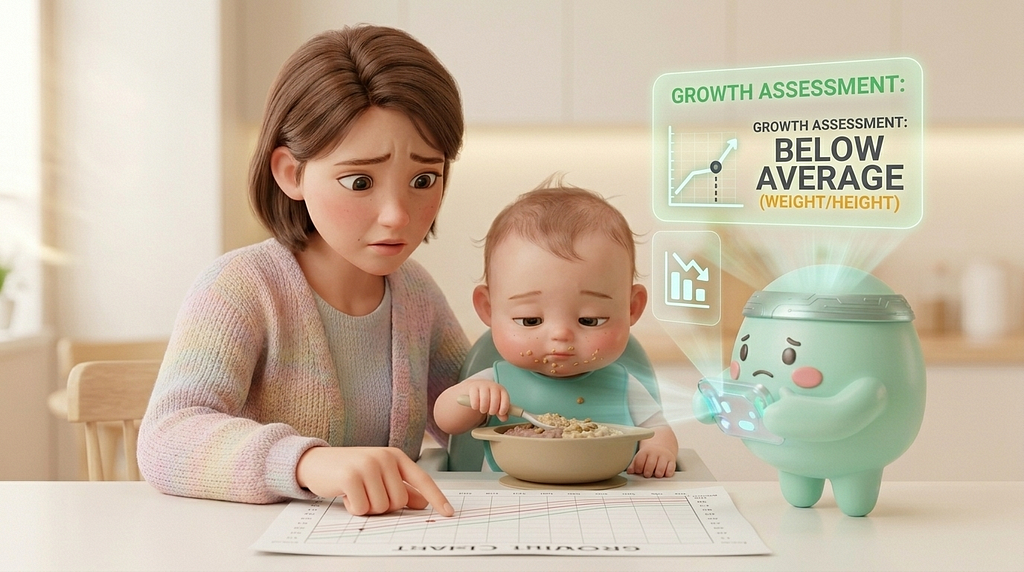
Is your child eating heartily but the scale won’t budge? While a healthy appetite is usually a good sign, failure to gain weight despite high food intake can be a significant clinical concern for parents. In many medical circles, this often stems from a gap between calorie intake and the body’s actual metabolic needs.
In formal clinical terms, this is often classified as Undernutrition or Failure to Thrive (FTT). According to the American Academy of Pediatrics (AAP), undernutrition is more accurately assessed through Z-scores or when a child’s rate of weight gain declines across two major percentiles on a growth chart, signaling that the body isn’t processing enough calories to sustain its development.
It’s Not Always About How Much They Eat
In reality, this concern is more common than most parents realize. Growth is not determined by food intake alone, and eating more does not always lead to immediate weight gain. Each child’s body works differently, and several underlying factors can influence how nutrition is used.
Some children naturally have a higher metabolism, meaning their bodies burn energy more quickly. Others are highly active, using most of their calorie intake to support movement and daily activity rather than storing it for growth. In some cases, the types of food consumed may be filling but not particularly rich in nutrients or calories. There are also situations where the body does not absorb nutrients as efficiently as expected, which can affect overall development despite adequate intake.
Top Reasons for Poor Weight Gain in Children
1. Inadequate Caloric Density
Sometimes, “eating a lot” doesn’t equal “eating enough calories.” If a child’s diet is high in fiber or water-heavy foods (like soups and juices) but low in healthy fats and proteins, they may feel full without meeting the metabolic energy requirements for growth.
2. Increased Energy Requirements (High Metabolism)
Some children are naturally “fast burners,” but high energy demand can also be pathological. As detailed by NCBI (StatPearls), conditions like hyperthyroidism, chronic heart disease, or chronic lung disease force the body to burn calories much faster than average, leaving little left for weight gain.
3. Malabsorption Issues
If the body cannot absorb nutrients from the food consumed, weight gain will stall regardless of portion size. Common “organic” causes include:
- Celiac Disease: An immune reaction to gluten that damages the small intestine.
- Food Allergies: Such as cow’s milk protein allergy, which causes intestinal inflammation.
- Intestinal Parasites: Common infections that “steal” nutrients from the child’s digestive system.
4. Chronic Infections
The body redirects massive amounts of energy to fight off long-term illnesses. Underlying infections such as Tuberculosis (TB), recurrent Urinary Tract Infections (UTI), or chronic anemia can drain a child’s energy reserves, making growth secondary to survival.
5. Excessive Fluid Intake (“Filling Up”)
A frequent culprit is the consumption of too many liquids. Drinking excessive amounts of juice, milk, or water shortly before or during meals can provide a false sense of fullness, preventing the child from eating the calorie-dense solid foods they need for growth.
When to Consult a Pediatrician
According to clinical guidelines from the AAP, you should seek medical advice if your child’s weight-for-age falls below the 5th percentile or if you notice these “Red Flags”:
- Wasting: The child looks visibly thin or has lost weight.
- Stunting: Height growth has also slowed down significantly.
- Lethargy: The child appears pale, weak, or tires easily.
- Developmental Delays: Missing milestones like walking or talking.
What This Means for You as a Parent
If your child eats well but doesn’t gain weight, it doesn’t automatically mean something is wrong. But your concern is valid. Growth depends not just on eating but on how the body uses, absorbs, and balances nutrition.
This is where tools like Vitababy can provide practical support in a more reassuring way. Instead of guessing or comparing with other children, Vitababy helps parents better understand their child’s daily nutrition patterns, growth signals, and overall development in a simple and accessible format.
By combining nutrition insights with easy-to-understand guidance, Vitababy allows you to:
- Get a clearer picture of whether your child’s intake supports their growth
- Understand possible gaps between what your child eats and what their body needs
- Make small, more confident adjustments to daily feeding decisions
Rather than replacing professional advice, it works as a daily companion for parents — helping reduce confusion and giving you more clarity in supporting your child’s growth journey.
References
- NCBI / StatPearls: Failure to Thrive
- American Academy of Pediatrics (AAP): Undernutrition in Early Childhood
Originally published on Medium.