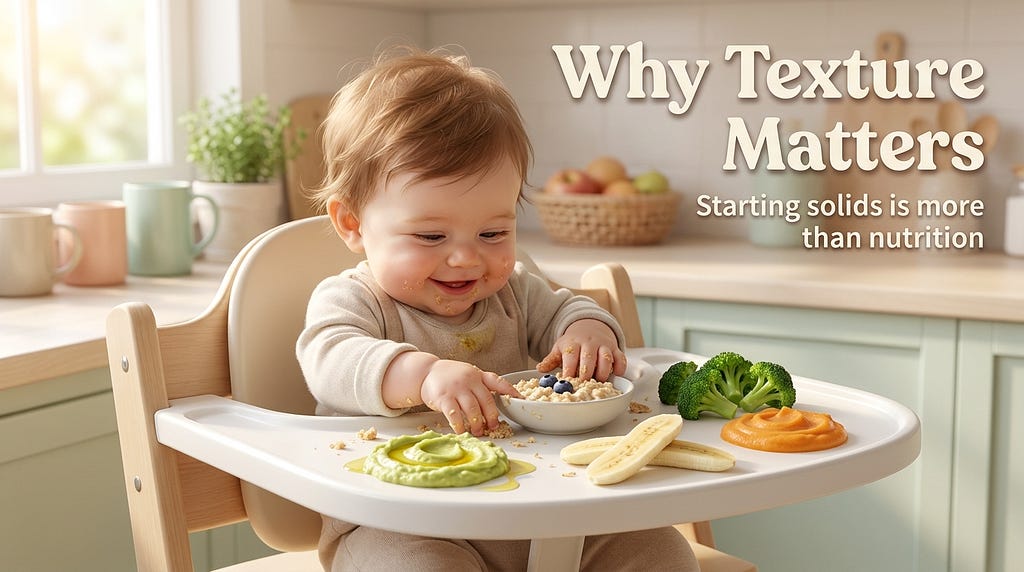
When parents begin introducing solids, most of the focus naturally goes to what babies should eat first.
Avocado or banana? Purees or finger foods? Vegetables before fruit?
But pediatric nutrition experts increasingly emphasize another important piece of the puzzle: texture exposure.
Learning to eat is not only about nutrition. It is also a sensory and developmental process that helps babies build chewing skills, motor coordination, and long-term comfort with food variety. Early experiences with different textures may even influence future eating habits and food acceptance later in childhood.
For many families, this changes the conversation entirely.
Feeding Is a Developmental Skill
Around 6 months of age, babies begin learning much more than simply swallowing food.
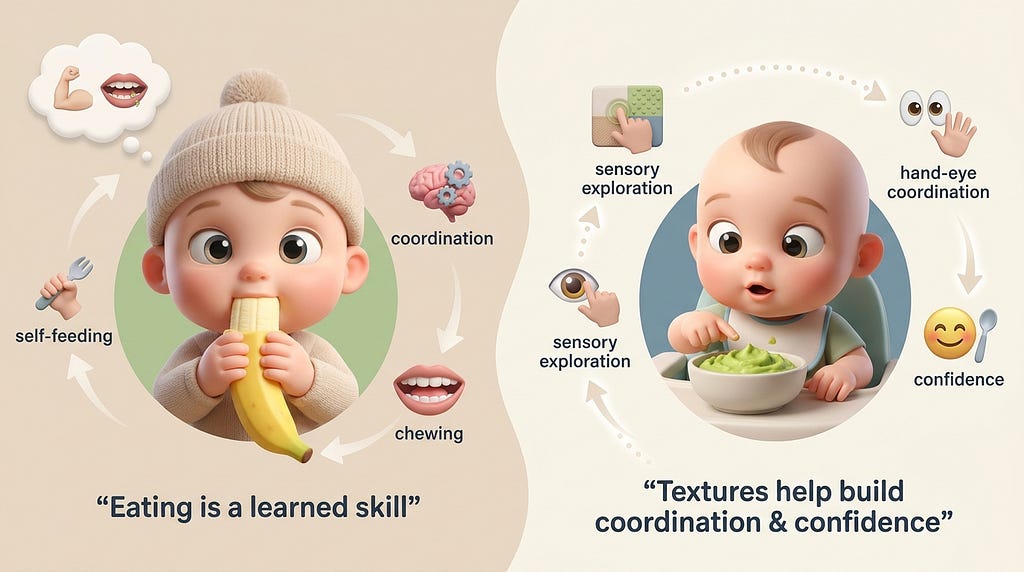
They are learning how food feels in the mouth, how to move it safely with the tongue, how to chew, and how to coordinate their hands, eyes, and mouth together. Even grabbing a soft piece of banana or trying mashed avocado becomes part of a developmental learning process.
Pediatric feeding specialists explain that introducing a variety of tastes and textures can help children develop chewing skills, strengthen fine motor development, and become more comfortable with different foods over time.
This is one reason feeding guidance no longer focuses only on smooth purees for extended periods. Instead, babies are gradually introduced to smooth foods, mashed foods, soft lumps, finely chopped textures, and eventually soft finger foods.
The progression matters because eating itself is a learned skill.
Why Babies Sometimes Reject New Textures
Many parents become anxious the first time a baby gags, spits food out, or makes a dramatic face during meals.
In many cases, these reactions are part of normal sensory learning.
Solid foods are completely unfamiliar to babies. Different textures, temperatures, and consistencies create entirely new sensory experiences. Pediatric feeding experts note that some coughing, gagging, or spitting can happen while babies adjust to these new sensations.
That does not automatically mean the baby dislikes the food.
Research on feeding development suggests repeated exposure plays an important role in helping children gradually accept unfamiliar foods and textures. Some babies may need several exposures before becoming comfortable with a certain texture.
The process can feel messy and unpredictable, but that is often completely normal during the first stages of solids.
The Long-Term Benefits of Texture Exposure
One reason pediatric feeding experts encourage gradual texture progression is because early feeding experiences may influence future eating patterns.
A major review published in Nutrients found that exposure to varied textures during infancy may support better oral motor development, improved acceptance of different foods, and reduced feeding difficulties later in childhood.
Another review exploring infant feeding behavior from PubMed Central found that delaying texture variety for too long may increase the likelihood of selective eating behaviors later on. Early sensory exposure appears to help children become more adaptable and confident eaters over time.
This does not mean parents need to follow a perfect feeding method.
The evidence increasingly suggests that what matters most is gradual progression, repeated exposure, safe preparation, and positive feeding experiences rather than rigid feeding rules.
Purees vs. Finger Foods Is Often Overcomplicated
One of the biggest feeding debates online is whether parents should choose traditional spoon-feeding or baby-led weaning (BLW).
In reality, many pediatric nutrition specialists support flexible approaches that combine both.
Smooth purees can help introduce nutrient-dense foods like iron-fortified oatmeal or meats, while finger foods help babies practice self-feeding, hand coordination, chewing, and texture exploration.
What matters more than the label is whether babies are safely exposed to different textures, tastes, and sensory experiences.
For many families, a balanced approach feels more realistic and less stressful.
Texture Progression Should Be Gradual
Pediatric nutrition guidance recommends matching food texture to developmental readiness.
Many babies begin with smooth foods such as yogurt, oatmeal, mashed avocado, or pureed sweet potato. These textures are often easier for beginners who are still learning swallowing coordination.
As feeding skills improve, babies may move toward mashed foods and soft lumps. This might include mashed banana with tiny soft pieces, fork-mashed peas, or thicker oatmeal. These textures encourage more mouth movement and chewing practice.
Eventually, babies may begin exploring soft finger foods like banana strips, steamed carrots, soft broccoli florets, or shredded chicken. These foods help babies practice grasping, chewing, and self-feeding skills.
The goal is not speed. Every baby develops feeding skills differently.
Safety Still Comes First
Texture progression should always happen alongside choking prevention.
According to pediatric feeding recommendations and guidance from the CDC infant feeding resource, babies should remain seated upright during meals, foods should be prepared in age-appropriate sizes, and hard, sticky, or round foods should be avoided during infancy.
Whole nuts, thick spoonfuls of nut butter, popcorn, and large chunks of food should still be avoided because of choking risk.
Parents should also remember that gagging and choking are not the same thing. Gagging can be a normal protective reflex during learning and often helps babies practice moving food safely in the mouth. Choking, however, is silent and requires immediate action.
When parents feel uncertain, speaking with a pediatrician or feeding specialist can help build confidence.
Building a Positive Relationship With Food
Early feeding is not about creating a “perfect eater.”
Many babies reject foods at first, spit textures out, throw food on the floor, or suddenly change preferences from week to week. This is a normal part of development.
Feeding specialists consistently emphasize that low-pressure exposure is often more effective than forcing bites or expecting immediate success. The real goal is helping children feel safe around food, curious about new experiences, and comfortable exploring textures over time.
Those repeated positive experiences may help support healthier eating habits later in life.
Starting solids is about more than nutrition. It helps babies build chewing skills, oral coordination, sensory confidence, and comfort with different foods over time.
Whether using purees, finger foods, or both, early texture exposure helps babies learn to eat safely and confidently. The process may be messy — but that is part of learning.
Learn more about evidence-based feeding guidance for modern parents at:
VitaBaby.ai
Originally published on Medium.