Not sure how much salt/sodium is safe for your baby? Learn how much your little one really needs!
Salt is one of the most misunderstood parts of baby nutrition. Many parents may be giving their little ones more sodium than recommended, often without realizing it. Backed by guidance from the NHS (The National Health Service) and research published in the American Journal of Clinical Nutrition (Maalouf et al., 2015), understanding salt intake early can help shape healthier habits and reduce potential risks over time.
Salt vs. Sodium
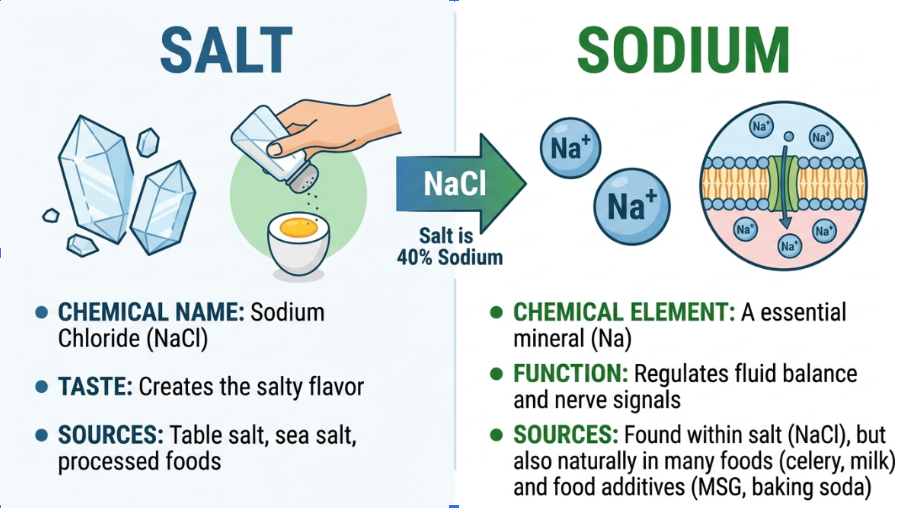
Salt, also known as sodium chloride, is a mineral made up of sodium and chloride. Sodium is an essential nutrient that helps regulate fluid balance, nerve function, and muscle activity in the body. However, the body only needs a small amount to function properly.
Most of the sodium in modern diets does not come from natural foods. Instead, it is added during processing to enhance flavor and extend shelf life. According to Harvard T.H. Chan School of Public Health, high sodium intake is linked to increased blood pressure and long term health risks, making it important to manage intake carefully from an early age.
Why Babies Shouldn’t Take Too Much Salt?
A baby’s body is still developing, and their kidneys are not yet equipped to handle excess sodium efficiently. The NHS recommends that babies under one year old consume less than 1 gram of salt per day, as their kidneys are not fully mature.
That matters because even small amounts can quickly add up. Excess sodium can place unnecessary strain on a baby’s system during a critical stage of growth. Research suggests that early exposure to high sodium levels may influence long-term health, including blood pressure regulation later in life. Findings published in BMJ Paediatrics Open further highlight the role of sodium balance in early development, reinforcing the need to manage intake carefully from the start.
“Infancy is a critical time for shaping lifelong eating habits. Introducing babies to foods that are overly sweet, salty, and high in additives can lead to unhealthy preferences later in life,” said Elizabeth Dunford, a research fellow at The George Institute for Global Health and adjunct assistant professor at the University of North Carolina.
Official Salt Intake Guidelines for Babies and Toddlers
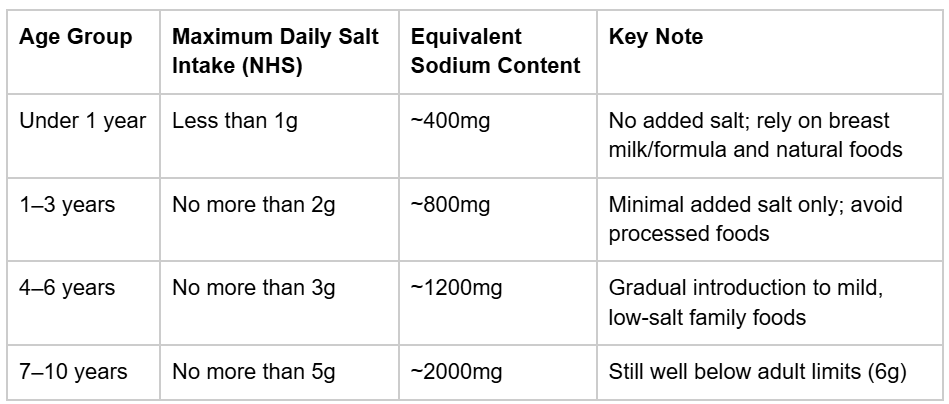
NHS provides clear, age specific limits for salt intake in babies and young children. These limits include all sources of sodium, from natural foods to processed products and any salt added during cooking or meals.
The table below shows the recommended maximum daily intake by age. It serves as a key reference for caregivers managing a child’s diet.
The Hidden Dangers of “Invisible Salt” for Babies
Hidden salt is one of the biggest challenges in baby nutrition. It refers to sodium found in processed foods, including products made for babies and toddlers.
Research shows how widespread the issue is. An analysis of 651 baby foods found that 70% did not meet the World Health Organization’s nutrition guidelines for protein. One in five products exceeded recommended salt levels, and 25% failed to meet calorie requirements.\
Most salt does not come from what you add at home. The National Health Service estimates that about three quarters of salt intake comes from packaged and everyday foods. For babies with very low daily limits, this adds up quickly. Even small portions can exceed safe levels. For babies under one year old, a single serving of a high salt processed food can go beyond the daily limit.
Where Hidden Salt Comes From
Hidden sodium appears in many everyday foods:
- Commercial baby foods: Flavored purees, meat or fish pouches, and baby cereals often contain added sodium, even when labeled for babies.
- Processed snacks: Rice cakes, puffs, and teething biscuits may include salt, even in unsweetened versions.
- Sauces and condiments: Soy sauce, ketchup, gravy, and mayonnaise are high in salt, even in small amounts.
- Tinned foods: Vegetables, pulses, or fish in brine contain added sodium compared to those in water
- Family meals: Soups, stews, and pasta dishes made for adults often exceed safe salt levels for babies.
How to Keep Your Baby’s Sodium Intake in Check
Keeping sodium intake within safe limits starts with simple, everyday choices:
- Cook meals at home: Preparing food from scratch gives you full control over ingredients and helps avoid hidden sodium.
- Use natural flavors: Herbs, spices, and unsalted broths can add taste without relying on salt.
- Check food labels: Look at sodium content in packaged foods and choose lower sodium options when available.
- Limit processed foods: Pre packaged meals and snacks often contain higher levels of sodium. Reducing these can make a significant difference.
- Choose fresh or frozen vegetables: These options typically contain less sodium than canned varieties.
- Be mindful with dairy: Foods like cheese can be high in salt, so offer them in moderation and opt for lower sodium choices.
These recommendations are supported by findings from the Centers for Disease Control and Prevention and Harvard T.H. Chan School of Public Health, which highlight that most sodium intake comes from processed foods and that reducing it starts with everyday decisions
Clearer labeling and stronger regulation for baby foods are still needed to support better choices. Until then, reading ingredient lists remains one of the most reliable ways to spot highly processed options. If an ingredient is unfamiliar, it is often a sign to reconsider.
Tools like VitaBaby can help simplify this process by giving clearer insight into what is actually in your baby’s food. And for those looking to take more control, preparing meals at home offers a more reliable way to manage ingredients and reduce excess salt, using simple foods you already trust.
Originally published on Medium.