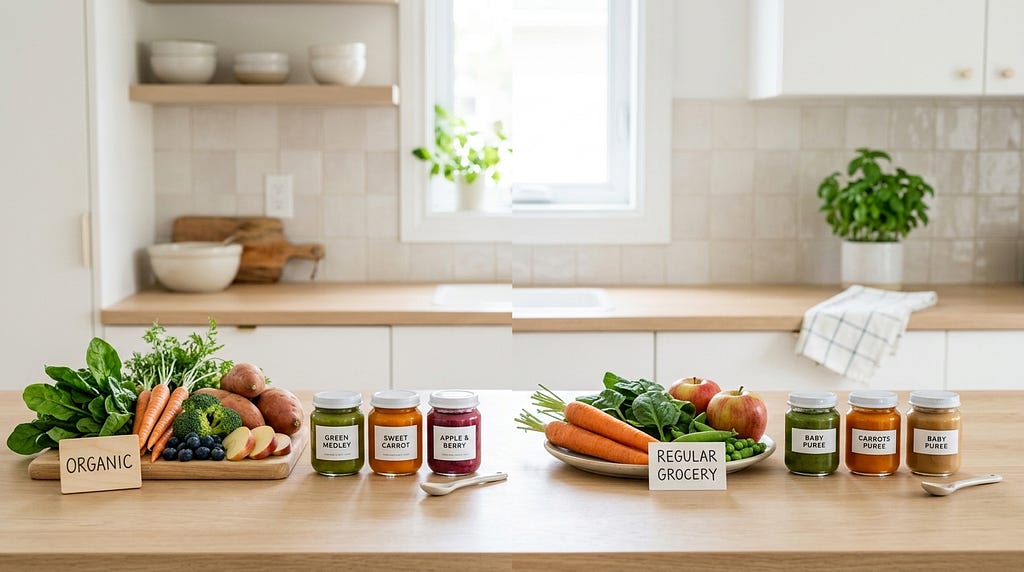
Choosing between organic and conventional baby food is one of the first major decisions new parents face. With higher prices, mixed opinions, and growing concerns about food safety, it is easy to feel overwhelmed.
The reality is more nuanced. Organic food is not a magic solution, but it does offer specific benefits along with some limitations that parents should understand before making a choice.
Does Organic Baby Food Have More Nutrients?
One of the most common assumptions is that organic food is more nutritious. However, current research suggests otherwise.
Studies published in the National Center for Biotechnology Information show that there are no significant differences in vitamin and mineral content between organic and conventional foods. In fact, the American Academy of Pediatrics also states that organic foods are not consistently more nutritious than conventional options.
There are some exceptions. Organic dairy products may contain slightly higher levels of omega-3 fatty acids, which support brain development. However, these nutrients can also be obtained from foods like fatty fish such as salmon or sardines.
What matters most is a balanced and varied diet, not whether the food is labeled organic.
Pesticides and Baby Health: What’s the Real Concern?
The strongest reason many parents choose organic food is to reduce pesticide exposure.
Infants and young children are more vulnerable because their bodies are still developing and they consume more food relative to their body weight. Research published in Environmental Health Perspectives shows that switching to an organic diet can significantly reduce pesticide levels in children’s bodies.
The American Academy of Pediatrics explains that while organic foods can lower exposure to pesticide residues, both organic and conventional foods are considered safe when properly regulated, handled, and washed.
It is also important to understand that organic does not mean pesticide-free. Organic farming allows certain natural pesticides, while conventional produce must meet strict safety limits.
The Trust Gap: Can You Always Rely on “Organic” Labels?
Transparency is another important factor.
While organic certification is designed to ensure higher standards, global supply chains can make verification difficult. Cases of mislabeling and organic fraud have been reported in various markets, which can reduce consumer trust.
This is where traceability becomes important.
At Vitababy, we focus on improving transparency through blockchain technology, providing a digital record of a product’s journey from farm to shelf.
- Verification: Access real product data instead of relying only on labels
- Traceability: Track sourcing and handling with greater confidence
Practical Tips for Parents
You do not need to go fully organic to support your baby’s health. A balanced approach is often the most practical.
- Prioritize high-risk produce
Choose organic for foods that tend to have higher pesticide exposure such as strawberries or spinach. For items like bananas or avocados, conventional options are generally fine. - Focus on dietary variety
The American Academy of Pediatrics emphasizes that overall diet quality is more important than whether food is organic. A diverse diet supports better nutrition and development. - Wash fruits and vegetables properly
Proper washing helps reduce surface residues regardless of how the food is grown. - Read labels carefully
Organic products can still contain added sugar or be highly processed. Always check the ingredient list.
Making Confident Choices
Organic baby food can reduce pesticide exposure, but it is not significantly more nutritious. According to the American Academy of Pediatrics, both organic and conventional foods are safe when part of a balanced diet.
If you are looking for more transparency in your food choices, tools like Vitababy can help you verify product sourcing and safety, allowing you to spend less time worrying and more time enjoying your baby’s important milestones.
Originally published on Medium.