Many parents find it confusing to decide how much milk, water, or juice to offer their toddlers each day. Drinks can seem simple, but the balance matters. Too much of one type can sometimes affect overall nutrition.
Pediatric guidance offers a few general recommendations that can help parents make everyday choices with more confidence.
The First Year: Keep It Simple
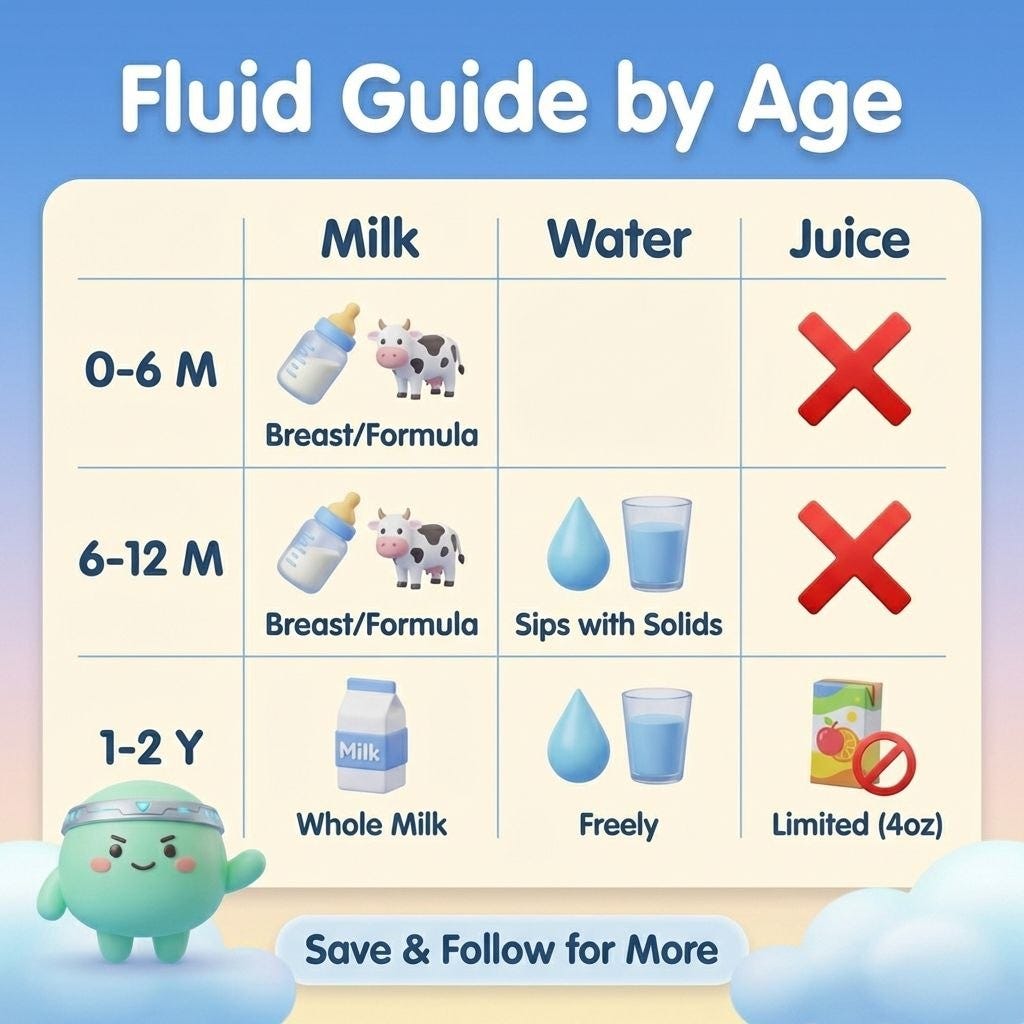
During the first 6–12 months, breast milk or formula is typically the main source of nutrition. At this stage, babies are still developing their feeding patterns, and liquids other than milk are usually limited.
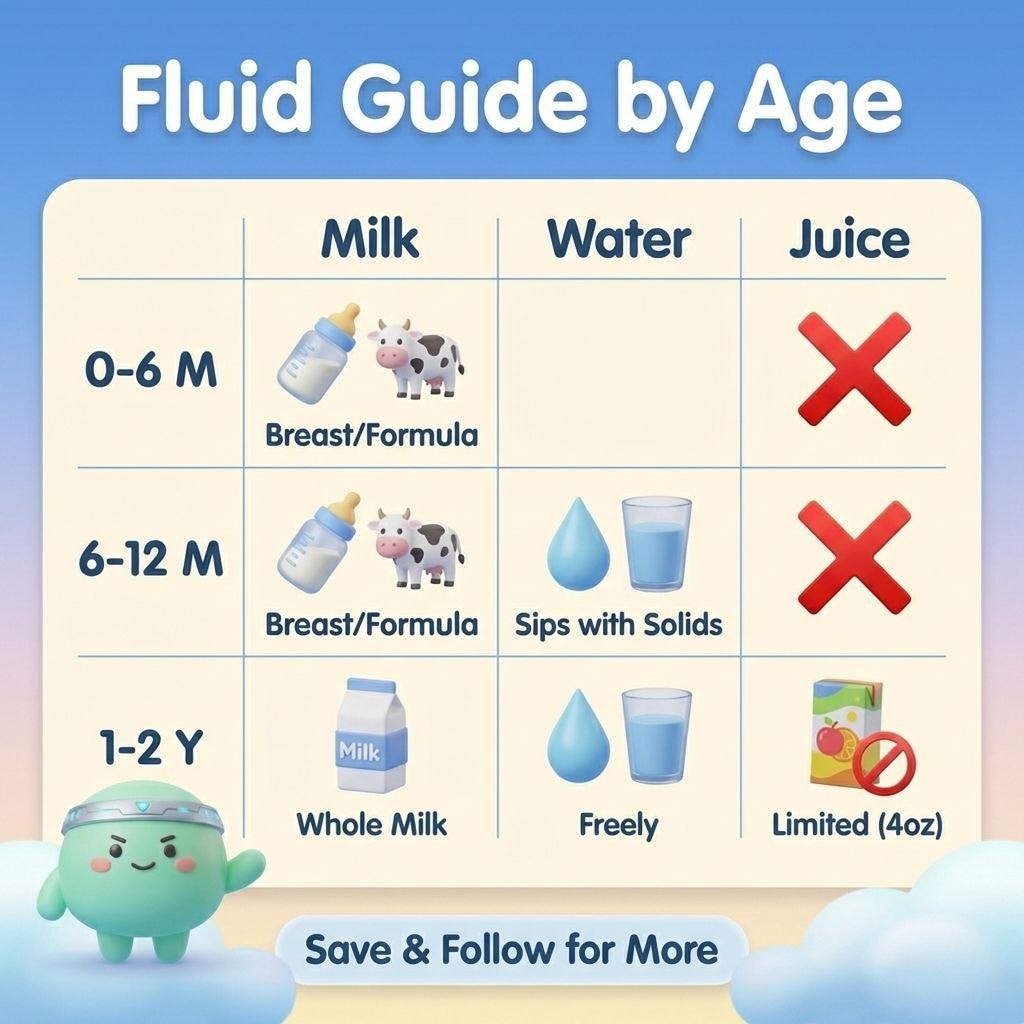
Small amounts of water may be introduced closer to the later part of the first year, often alongside solid foods. Juice is generally not recommended during this stage.
Ages 1–3: Finding the Right Balance
As children move into the toddler stage, their diet begins to include a wider variety of foods. Drinks also start to play a different role.
- Milk
Milk is commonly included as part of a toddler’s diet, but in moderate amounts. Around 16–24 oz (2–3 cups) per day is often suggested. Larger amounts may reduce a child’s appetite for other foods, including those that provide important nutrients like iron. - Water
Water can be offered throughout the day and is often the main source of hydration between meals. It is simple, accessible, and supports daily fluid needs without adding extra sugar or calories. - Juice
Juice is sometimes offered in small amounts, but it is usually limited to about 4 oz per day, if given at all. Whole fruits are often preferred because they provide fiber along with natural sugars.
Why Balance Matters?
Each type of drink serves a different purpose. Milk can contribute nutrients such as calcium and fat. Water helps maintain hydration. Juice, while sometimes included, is generally used in smaller amounts.
When one type of drink is offered in excess, it can affect eating patterns. For example, large amounts of milk or juice may reduce a toddler’s appetite for solid foods. Over time, this can make it harder to maintain a balanced diet.
A Simple Approach for Everyday Meals
For many families, keeping drinks simple can make daily routines easier:
Use milk as part of meals, in moderate amounts
Offer water throughout the day
Limit juice to small portions, if included
These small habits can help support balanced nutrition without making mealtime more complicated.
Toddler nutrition does not have to be perfect. Focusing on simple routines and balanced choices can make a difference over time, while keeping meals manageable for both parents and children.
Originally published on Medium.