vitababy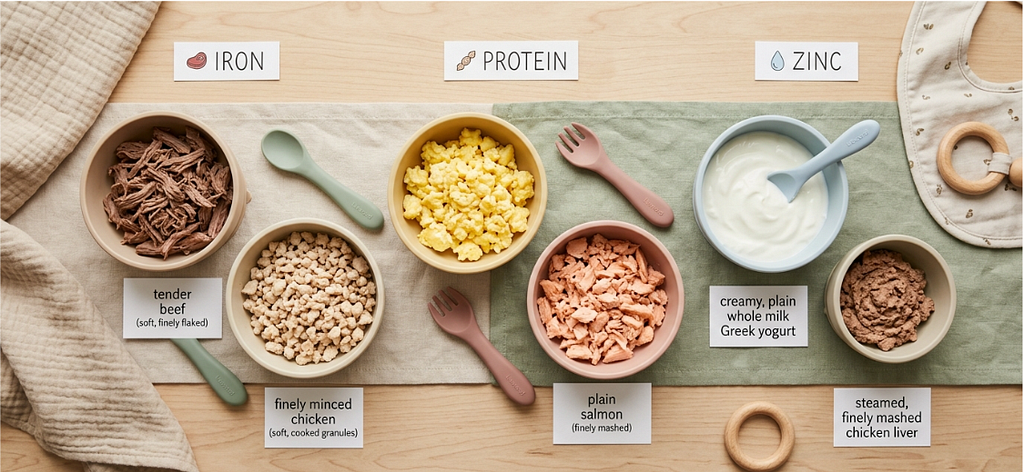
Why Babies Need More Than Just Calories
Starting solids is an exciting milestone. Around 6 months of age, babies begin needing more nutrients than breast milk or formula alone can provide. This stage, often called complementary feeding, is when parents introduce solid foods alongside continued breast milk or formula. According to the Centers for Disease Control and Prevention (CDC), nutrient-rich foods become especially important during this period.
One group of foods that deserves special attention is animal protein. Foods like beef, chicken, fish, eggs, and yogurt provide nutrients that support growth, brain development, and healthy eating habits during infancy.
Why Animal Protein Is Different
Not all protein sources provide nutrients in the same way. Animal proteins contain “heme iron,” which the body absorbs more efficiently than the non-heme iron found in many plant foods.
Animal foods also naturally contain:
- High-quality protein with all essential amino acids
- Zinc
- Vitamin B12
- Choline
- Healthy fats important for brain development
The USDA Nutrition Evidence Systematic Review (NESR) found strong evidence that complementary foods containing substantial amounts of iron, such as meats or iron-fortified cereals, help maintain healthy iron status during the first year of life.
Animal-source foods are good sources of protein, iron, and zinc, and that plant-based complementary foods alone may not provide enough iron and zinc for infants without careful planning or fortification.
Best Animal Proteins for Early Complementary Feeding
Parents often wonder which animal foods are appropriate for beginners. The good news is that many options can work well when prepared safely and with an age-appropriate texture.
Beef
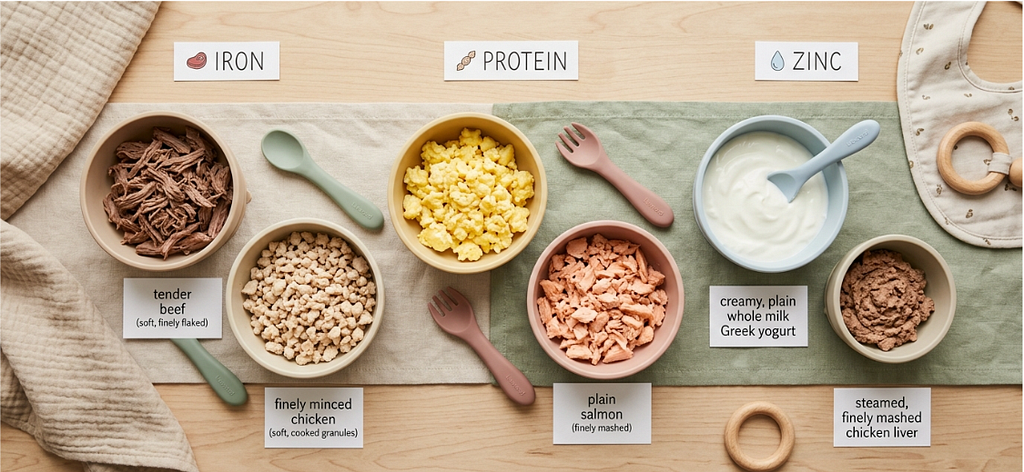
Beef is one of the richest natural sources of iron and zinc. Soft shredded beef, finely minced beef, or smooth beef puree can work well for beginners.
Chicken and Turkey
Poultry provides protein, iron, and zinc with a milder flavor that some babies enjoy early on.
Fish
Fish offers protein and healthy fats, including omega-3 fatty acids that support brain development. Choose low-mercury options such as salmon, cod, trout, or sardines.
Egg
Eggs contain protein, choline, vitamin B12, and healthy fats. Current guidance supports introducing common allergens like eggs early rather than delaying them, unless otherwise advised by a healthcare provider.
Yoghurt and Cheese
Plain whole-milk yogurt and soft cheeses can provide protein and calcium. These are good complementary foods, although they are generally lower in iron than meats.
How to Introduce Animal Protein Safely
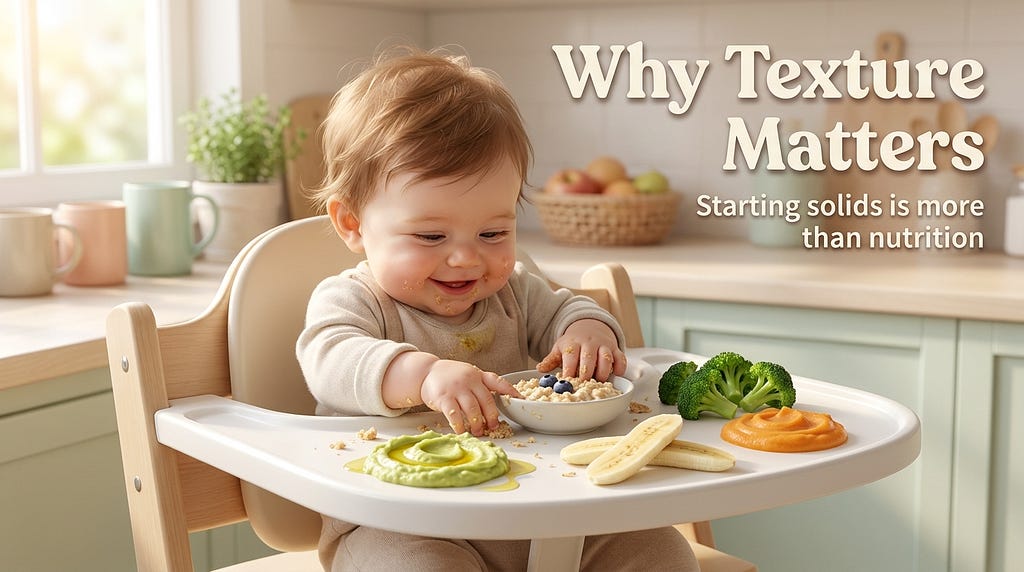
Texture matters more than teeth. Babies do not need teeth to start eating soft foods.
Here are a few tips:
- Serve meat soft, moist, and easy to swallow
- Avoid chunks that could increase choking risk
- Start with small portions
- Introduce one new food at a time if preferred
- Avoid adding salt or sugar
Examples of beginner-friendly preparations include:
- Pureed chicken mixed with sweet potato
- Soft shredded beef
- Mashed salmon
- Scrambled eggs cut into strips
- Plain yogurt with mashed fruit
Introducing a variety of textures and flavors during infancy to help babies learn eating skills and become comfortable with different foods.
What About Plant-Based Feeding?
Plant foods absolutely have a place in complementary feeding. Beans, lentils, tofu, vegetables, fruits, grains, nuts, and seeds all contribute valuable nutrients and fiber.
However, exclusively plant-based complementary feeding requires more careful planning, especially for iron, zinc, vitamin B12, and protein intake. The NCBI complementary feeding guidance notes that vegetarian complementary foods alone may not provide enough iron and zinc during infancy without fortified foods or supplementation.
Do Babies Need Meat Every Day?
Not necessarily. What matters most is overall nutrient intake over time.
A balanced complementary feeding approach may include:
- Animal proteins several times per week
- Iron-rich foods regularly
- Fruits and vegetables daily
- Continued breast milk or formula during the first year
The goal is variety, balance, and exposure to nutrient-dense foods.
A Simple Way to Think About It
During early complementary feeding, babies have tiny stomachs but very high nutrient needs. That means every bite counts.
Animal-source foods can help provide concentrated nutrition in small portions, especially iron, zinc, and high-quality protein. Combined with fruits, vegetables, grains, and healthy fats, they can support healthy growth and development during one of the most important stages of life.
For many families, introducing animal protein early is not about following a strict feeding philosophy. It is simply a practical way to help babies get the nutrients they need as they begin their journey with food.
Originally published on Medium.